Seyrantepe Mah, Dilek sok. No:5 Kağıthane, Istanbul
Dojo
Dojo
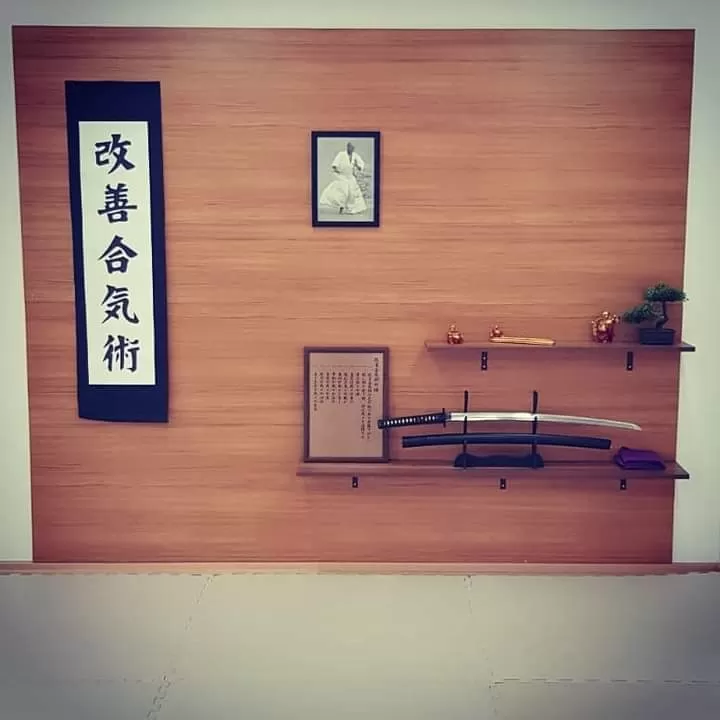
Rules to Be Observed in the Dojo
The special nature of our training requires high performance and personal responsibility throughout practice. For this reason, the responsibilities, authority, and character of the instructors and members in the dojo are not questioned. You are expected to learn and strictly observe the rules of the dojo.
Respect is shown by bowing when entering and leaving the training area.
Slippers and shoes must be neatly lined up side by side in the changing rooms or at the entrance of the training area.
The training area is reserved for technical practice before and after class and is not a place for games.
Class begins when the instructor claps their hands twice and instructs the class to line up.
Students line up from right to left, starting with higher-ranked belts to lower-ranked belts. New students or students of lower rank line up to your left.
When the instructor gives the command “Seiza,” students move into the kneeling position, place the left hand inside the right palm with thumbs touching, and wait for the next command.
When entering the kneeling (Seiza) position, the left foot touches the ground first; when standing up, the right foot is lifted first.
Next, the instructor gives the command “Mokuso,” requesting a brief period of meditation. Sit with your back straight, maintain the hand position described above, and close your eyes. Clear your mind of all worries and thoughts, and prepare yourself for the training that is about to begin. When the instructor gives the command “Mokuso Yame,” open your eyes, end the meditation, and wait for the next command.
The following command is “Courtesy to the spirit of Aiki, courtesy rei.” To bow to the founders of the Aikijutsu systems and past masters, place your left hand and then your right hand on the floor in front of you and bow. To return to the sitting position, place your right hand first, then the left.
The next command is “Courtesy to Shidoshi, courtesy rei.” Bow in the same manner as before. Finally, return to the Seiza position and bow to the instructor.
At the end of the class, the same bowing sequence is repeated.
If students need to enter or leave the class during training, they must first ask permission from the instructor. When entering the class, students move into the Seiza position and wait for the instructor’s permission. Students always bow when entering and leaving the training area.
If your uniform becomes disarranged or your belt comes undone during class, turn your back to the instructor and the class, move into the Seiza position, and then make the adjustment.
During paired practice, students always bow to each other at the beginning and end of training and say “Ch’ien,” which means “I respect you” or “I honor you.”
Anger or aggressive behavior is strictly prohibited in the dojo. Everyone learns from their own mistakes and must remember that all are students of the same art. If the instructor is outside the training area, the most senior student present is shown the same respect as the instructor.
Fingernails and toenails must be trimmed and clean, and the body must be free from unpleasant odors.
Talking during class is not permitted.
EWhen the instructor is speaking or demonstrating techniques, students sit either in the Seiza position or cross-legged.
Before or after class, new students may ask senior students for help and guidance.
Uniform
Hakama
Keiko-Gi
Obi
Throughout all our practice, we must always maintain a “beginner’s mind.” When stepping onto the tatami, our minds should be free of thoughts, prejudices, and emotions. Let us always remember: “Learning is a door, not a house.