Seyrantepe Mah, Dilek sok. No:5 Kağıthane, Istanbul
Kenjutsu
Kenjutsu
Kaizen Kenjutsu (The Art of Sword Combat)
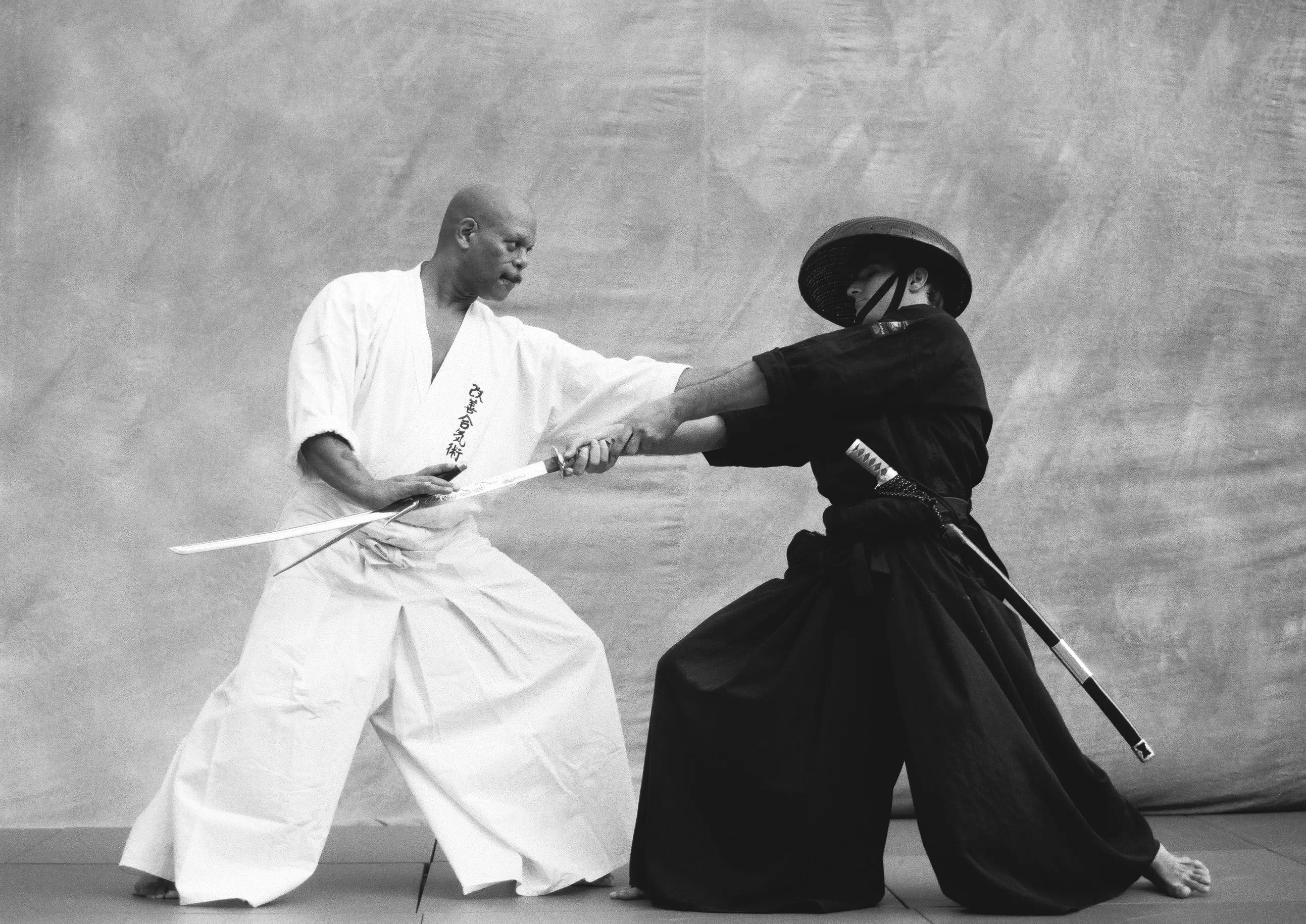
Kenjutsu is a Japanese martial art that originated in Japan in the 15th century and specializes in the use of the Japanese sword (katana). It is especially the art of sword usage beginning from the act of drawing the sword from its saya (scabbard).
Samurai regarded the sword as a reflection of the soul. In this light, many Kenjutsu practitioners began to question whether a higher level of understanding could be attained through sword training and practice. Sword masters developed the art of Kenjutsu not merely as a superior combat system, but as a means of cleansing the depths of the spirit. In order to study the hidden techniques and spiritual qualities of the sword, many kata were developed. These kata are much like puzzles-martial art images that can only be assembled after relentless dedication and disciplined practice by the practitioner.
Kata (pre-arranged forms or exercises) are the primary method for learning the subtle movements required. Initially, solo practice is performed while learning fundamental stances, ready positions (kamae), footwork, angles, and cutting techniques. Once the practitioner has mastered proper mechanics, paired kata (kumitachi) are introduced. Depending on the angles involved, kata incorporate both offensive techniques (attacks, strikes, and cuts from various angles) and defensive techniques (moving off the line of attack, blocks, and sometimes counterattacks from different angles). Proper etiquette is always preserved; techniques are applied with maturity and focused mental concentration to prevent injury, according to the practitioner’s level.
On a mental level, kata strengthens the nervous system. It teaches emotional control and develops bodily control while in motion through training. Dedicated kata practice balances both body and spirit. Repeated execution of these exercises strengthens physical power and builds resilience against discomfort and pain.
Learning these ancient techniques allows practitioners to develop skills and abilities applicable to daily life—such as facing challenges with ease, remaining calm under pressure, and managing stress effectively. Sword training harmonizes mind, body, and spirit, while also enhancing physical recovery, flexibility, and mental clarity, enabling individuals to discover solutions they might not find through other means.
A large portion of Kenjutsu training consists of practicing with the bokken (wooden sword) and katana (steel sword) to properly learn defensive and cutting techniques used in real sword combat. For safety reasons, free sparring with bokken and katana is rarely practiced. Kaizen Kenjutsu training also includes instruction in various weapons such as the spear, staff, short sword (wakizashi), and jutte (a truncheon similar to the sai). Common target areas include the head, wrists, solar plexus, and legs.
Purpose of Our Training
To purify and discipline the spirit through the study of the sword
To cultivate inner peace, enlightenment, and calm humility
To attain the power of mental determination
To increase concentration
To channel energy effectively
To enhance perception
o improve balance, reaction ability, and coordination skills
General Etiquette
Standing bow
Taking Seiza position (note: checking the hakama)
Placing the sword on the floor from Seiza
Seiza bow
Placing the sword into the hakama
Holding the sword
Drawing the sword
Distance and timing (Ma-ai)
Chiburi (cleansing the blood from the blade)
Returning the sword to its place
Combat Positions
Standing techniques – Tachi-waza or Tachiai
Seated techniques – Zadori
Foot placement should be balanced, relaxed yet ready. The upper body remains upright at all times, shoulders relaxed, knees slightly bent.
Postures (Kamae Positions)
Middle level – Chudan no Kamae
High level – Jodan no Kamae
Low level – Gedan no Kamae
Side at shoulder level – Hasso no Kamae
Side at hip level – Waki no Kamae
Stances
Right 45-degree stance – Migi Hammi Dachi
Left 45-degree stance – Hidari Hammi Dachi
Attention stance – Musubi Dachi
Shoulder-width stance – Hachiji Dachi
Front stance – Zenkutsu Dachi
Horse stance – Kiba Dachi
Back stance – Kokutsu Dachi
Cat stance – Neko Ashi Dachi
Cross-legged stance – Kosa Dachi